Doohers and Shakers: Chris Gadek
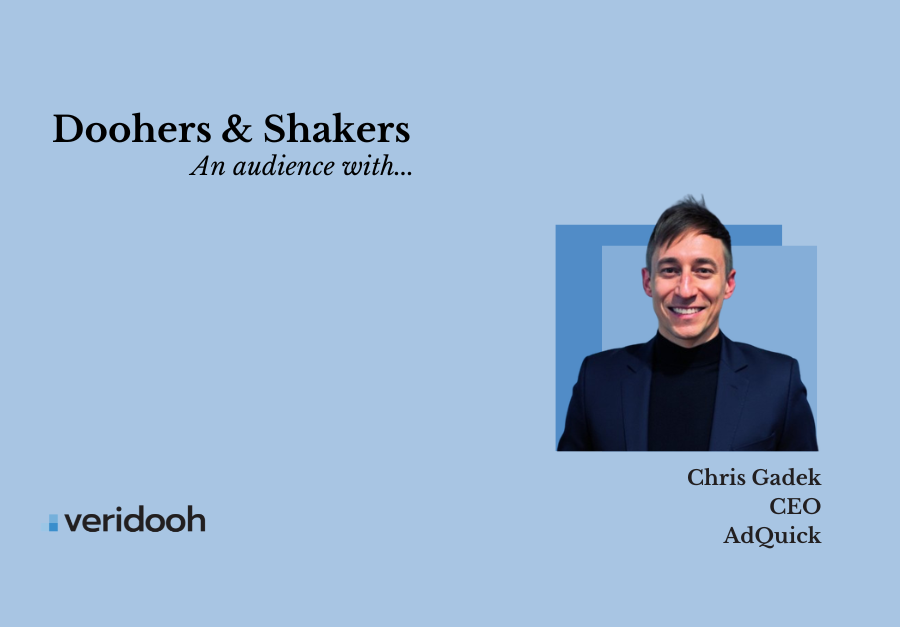
This month, the next guest in our long-form interview series - Doohers and Shakers -is Chris Gadek, CEO at AdQuick. Chris was an early practitioner of what's now called Growth Marketing, back when 'growth' wasn't a team, a title, or a department. It was just a mandate: figure it out, or the company dies. His experience has shaped the beliefs he still operates by: growth is a system, not a channel. Attribution and incrementality are non-negotiable, especially in messy real-world environments. And creative + data will always beat either one alone. At AdQuick, he applies his growth mindset to the oldest ad channel in the world, building the infrastructure and intelligence layer that let marketers treat OOH like a true performance channel. We hope you enjoy the read!
As CEO at AdQuick, what is the single biggest shift you’ve implemented in AdQuick’s strategic focus, and where do you see the most significant opportunities for innovation in the OOH space over the next 18 months?
The biggest shift has been sharpening our focus on turning out-of-home advertising into a truly data-driven and performance-oriented channel with precision audience targeting you expect from digital channels.
We are also investing heavily in AI and automation to make planning, buying, and measuring OOH more efficient and accountable. This will elevate OOH beyond traditional buys to a more measurable and indispensable part of marketing campaigns. A piece on our blog on “trading RFPs for APIs” summarizes much of what we’re thinking.
AdQuick has partnered with Veridooh to bring independent verification to DOOH campaigns. From AdQuick’s perspective, why was this partnership with Veridooh essential, and how does independent verification directly address friction points for your agency and brand clients?
Partnering with Veridooh was essential because independent verification finally brings the transparency the DOOH space needs. Agencies and brands have historically struggled with uncertainty around whether campaigns run as planned and delivered to the right audience.
Verification removes this friction by providing unbiased proof of delivery and impressions, which builds confidence and accelerates campaign approvals and spend.
The term "trust" is central to verification. How does this partnership not only build trust for advertisers but also benefit the media owners who list their inventory on your platform?
Trust is the foundation of any successful advertising ecosystem, our director of analytics gave a talk about this more broadly. For advertisers, third-party verification guarantees that budget is going exactly where promised.
For media owners, it validates their inventory quality and builds credibility, allowing them to command higher rates. This partnership lifts confidence across the board and helps mature the market by proving everyone’s accountability.
If you weren't working in adtech, what career path do you think you would have chosen and why?
If I were not in adtech, I would definitely be in some other type of software and marketplaces business. I have a passion for using data and technology to solve complex business challenges and create scalable growth. The blend of analytics and creativity in marketing is what excites me most, so I would naturally gravitate there. Or maybe, I’d be in a band (I still do that too, in my free time).
What do you see as the biggest trends and technological advancements shaping the future of OOH over the next five years?
AI and programmatic automation will be game changers in the next five years. We'll see a fundamental shift from location-based buying to audience-based buying that enables precision targeting. Privacy-safe data solutions combined with improved measurement and attribution will finally allow OOH to be held to the same ROI standards as digital. This will drive expanded budgets and campaign sophistication.
You've written some very direct and thought-provoking opinion pieces, such as your article titled CMOs: It’s Time To End The Age Of BS. In the article, you argue that fraud, waste, ineffectiveness and 'dumb decisions' by CMOs, such as spending heavily in fads like the metaverse, have led to a full-blown digital marketing crisis. How can the OOH industry avoid falling into the same traps as it becomes more digital and data-driven?
The OOH industry must learn from digital’s mistakes by committing to transparency and measurable outcomes from day one. That means adopting independent verification, refusing to chase shiny fads without proof, and demanding accountability at every stage.
OOH’s physical world impact is powerful but must be backed by rigorous analytics to avoid waste and build long-term trust. It’s a huge opportunity to us to not make the same mistakes as big tech.
The OOH industry currently accounts for 2–3% of total ad spend in the US. What foundational shifts in technology, data, and measurement would be required for this figure to reach double digits?
To break the ceiling, OOH needs three main shifts: access to clean, privacy-compliant audience data enabling audience-first buying; full programmatic automation to reduce friction in buying and selling; and widespread adoption of standardized independent verification for accountability. These changes will drive efficiency and trust, making OOH a core channel for marketers rather than an afterthought.
What fundamental truth about OOH advertising do very few people agree with you on?
A fundamental truth I hold is that OOH is not just a branding channel but a full-funnel performance marketing tool when executed right.
Many see it as legacy and unmeasurable, but with today's technology, OOH drives direct response and measurable ROI just like any digital channel.
This view is still surprisingly unpopular, but it’s where the industry is inevitably heading.


Comments